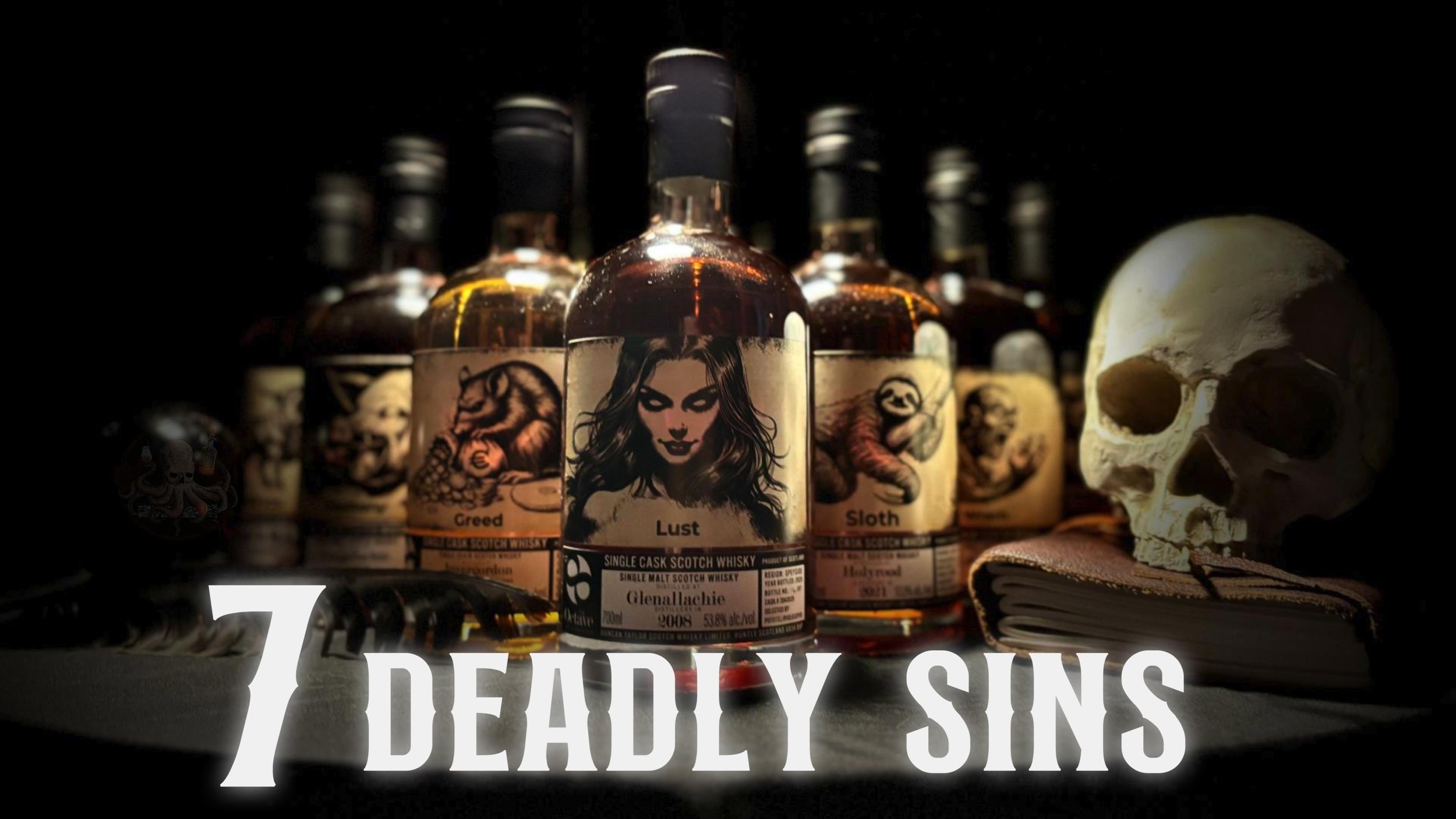
the seven deadly sins
There are tastings that serve to give you an idea of a whisky. And then there are others that serve to tell a story.
The Seven Deadly Sins series, created by Duncan Taylor in collaboration with Potstill Vienna, undoubtedly belongs to the second category. It is not simply a collection of bottlings, but a project with a specific idea: to interpret whisky through the concept of the seven deadly sins, transforming them into character, contrast, and personality.
the deadly sins as a key to understanding
Sloth, Gluttony, Wrath, Envy, Lust, Greed, and Pride. More than moral categories, the deadly sins have always been a mirror of human inclinations. They speak of excesses, desires, and impulses that are difficult to control.
Transposing this imagery into the world of whisky is a delicate operation. The risk is that it could become an exercise in style. However, Seven Deadly Sins avoids this trap by choosing a more interesting path: not seeking unanimity, but telling distinct stories.
duncan taylor and the octave project
To truly understand the meaning of this series, it is necessary to say a few words about Duncan Taylor, one of the most respected names in the independent bottling scene.
The common thread running through many of their projects is the idea of interpretation, not simplification. This philosophy is also evident in The Seven Deadly Sins, especially through the use of The Octave casks.
These are small casks, designed to increase the interaction between wood and spirit. Not to speed up the process, but to intensify the result. The resulting whisky is often more concentrated, more direct, sometimes even edgy.
These are not whiskies that try to please everyone. They are whiskies that take a stand.
the seven interpretations
Each bottling in the series represents a deadly sin, not in a didactic way, but through the character of the distillate itself:
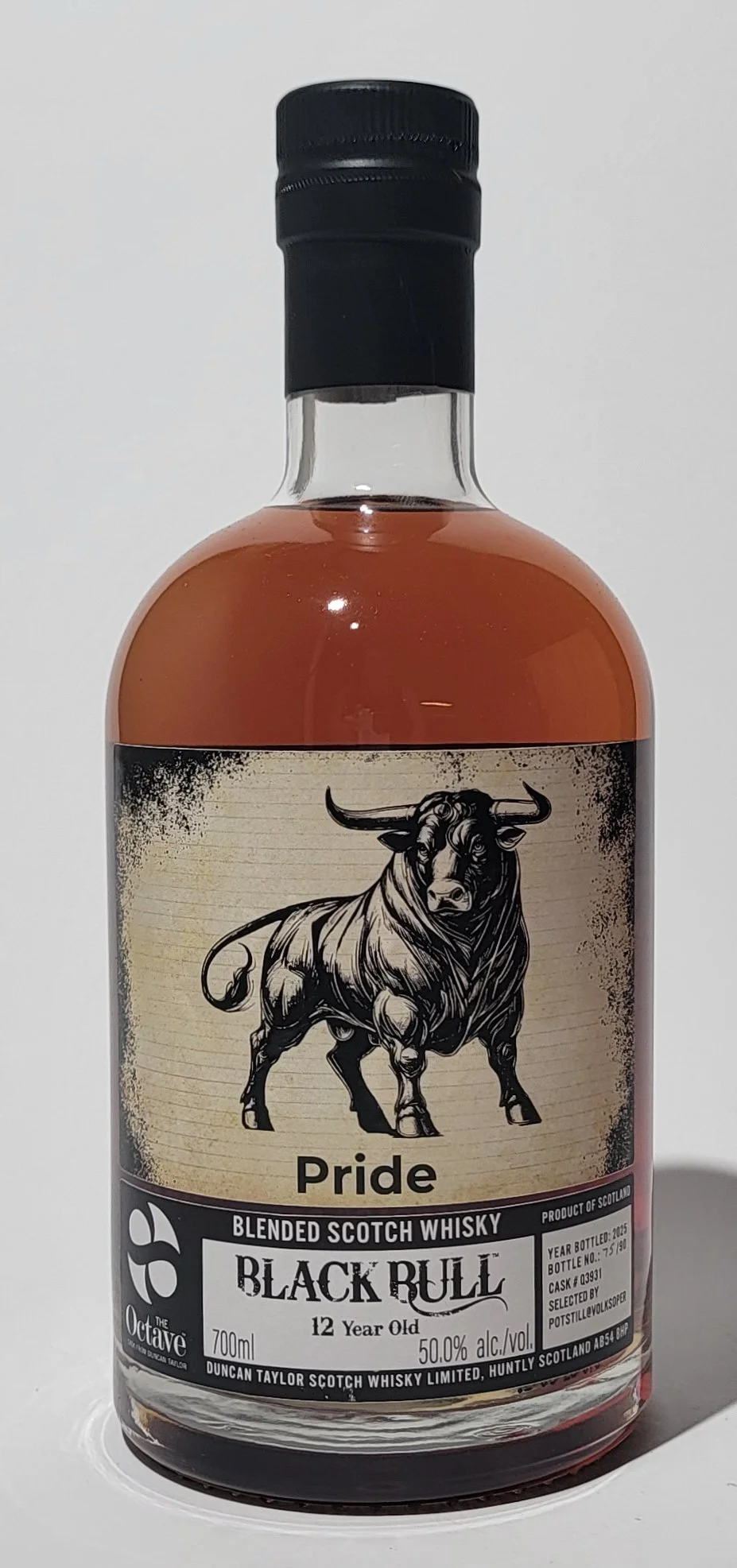
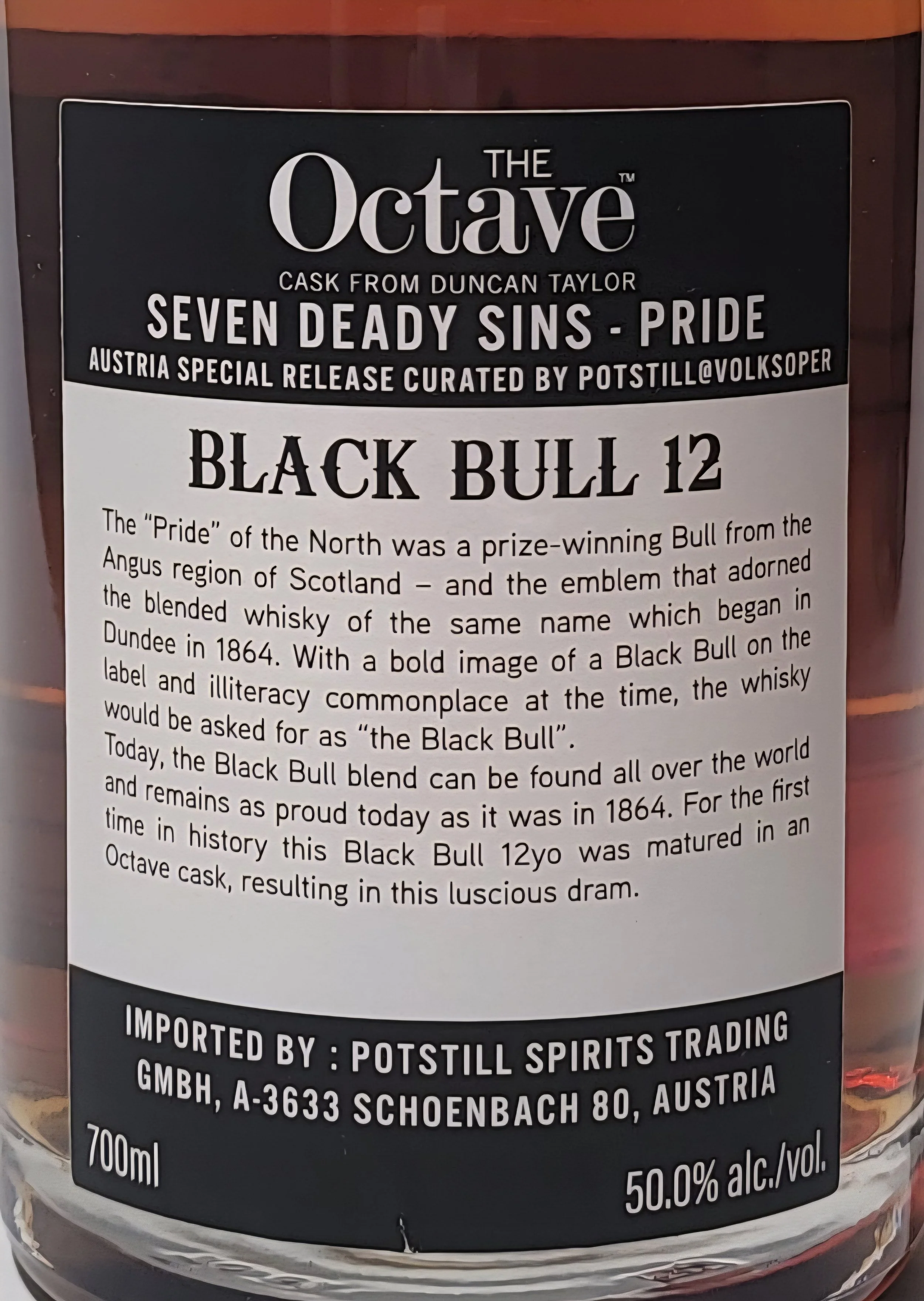
Pride – Black Bull, 12 years old
A blended malt with a strong identity and obvious confidence.
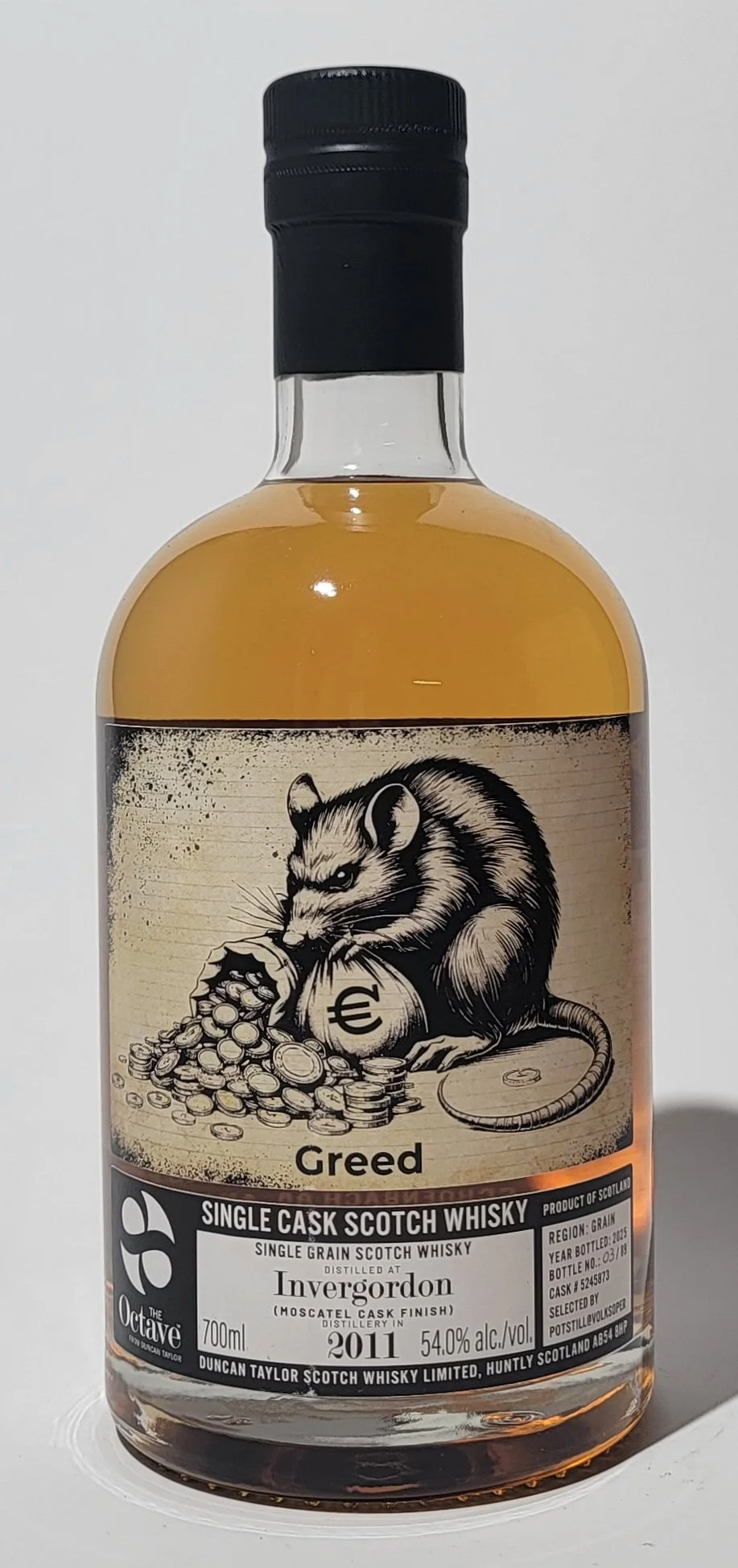
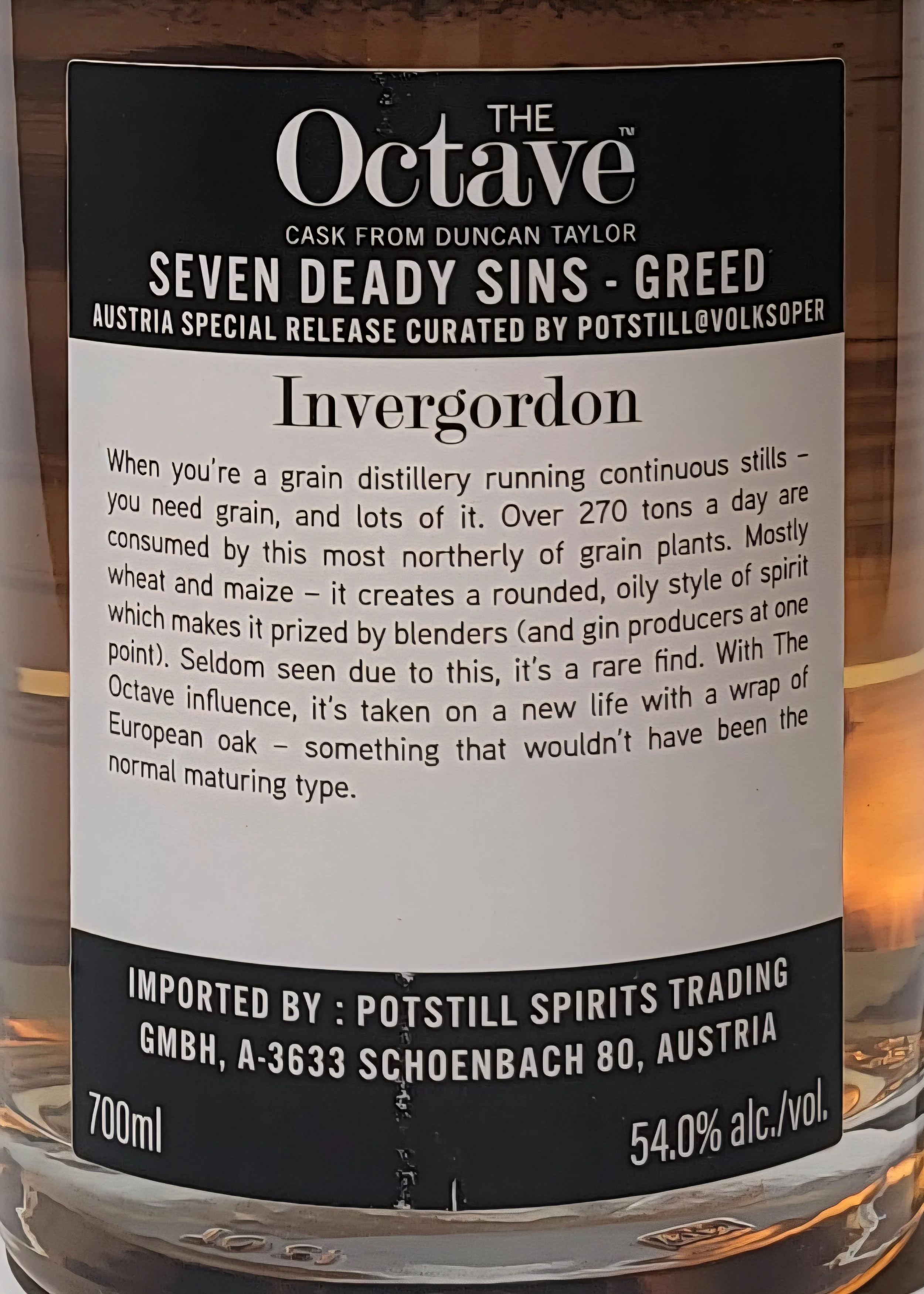
Greed – Invergordon, 14 years old
A surprising single grain, where greed becomes control and structure.
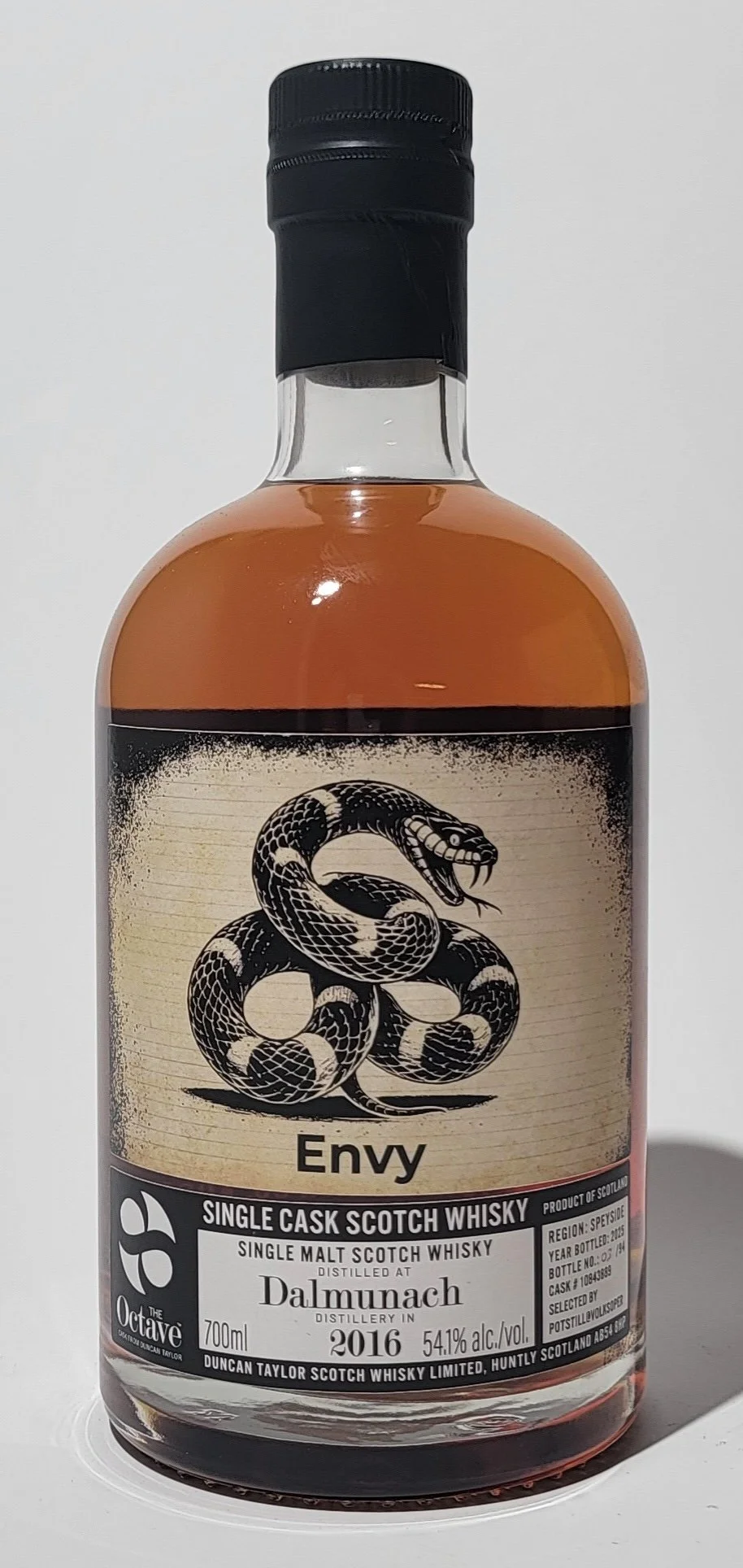
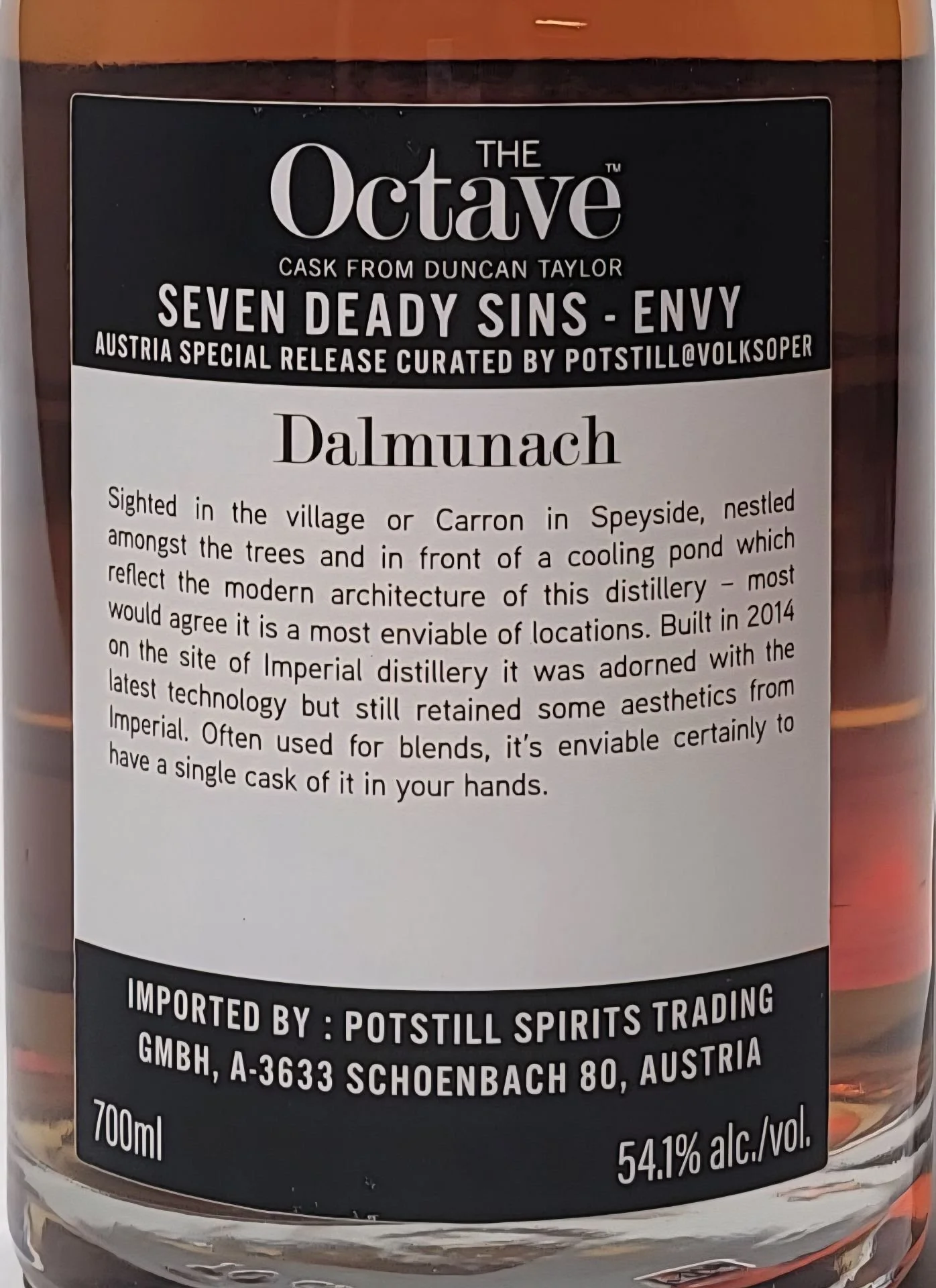
Envy – Dalmunach, 9 years old
Young, elegant, and competitive, with an attention-grabbing freshness.
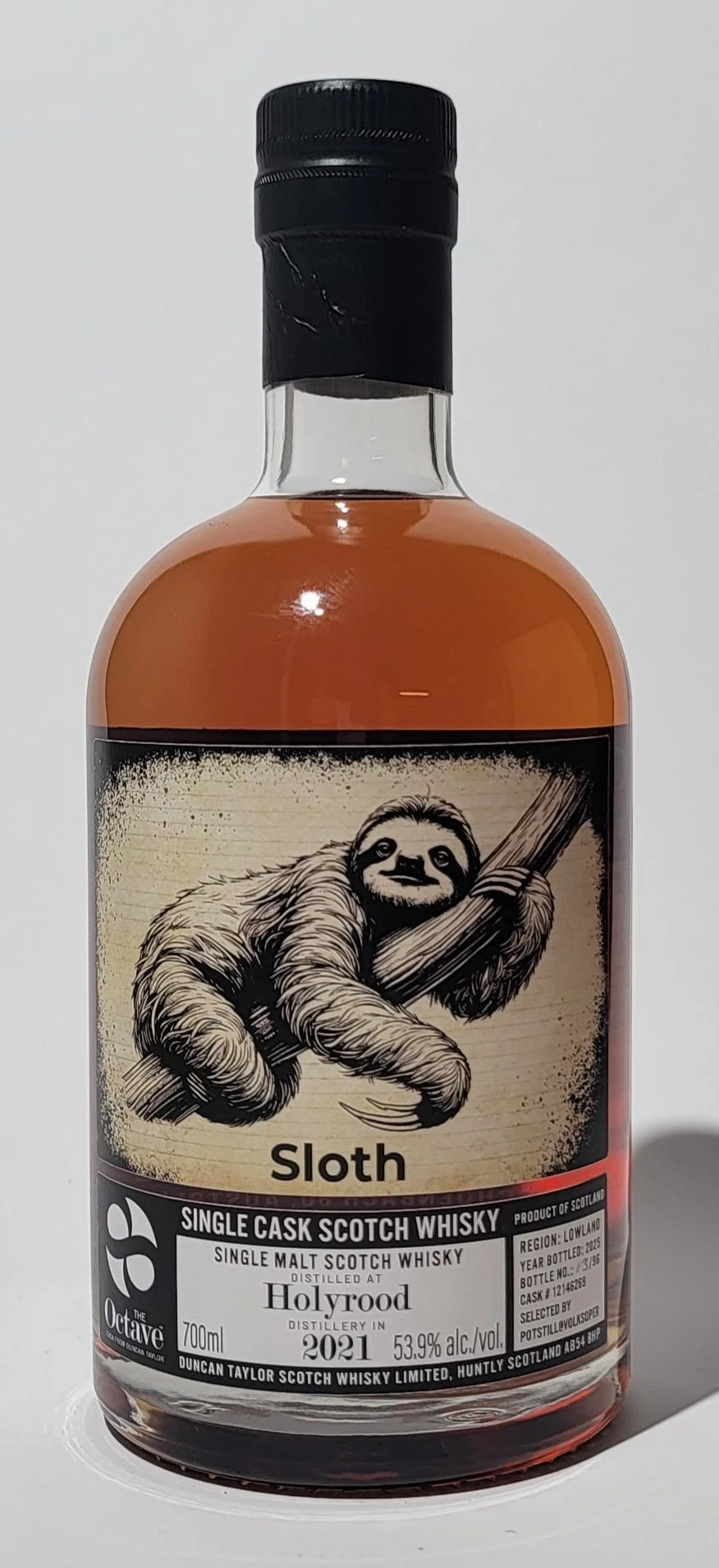
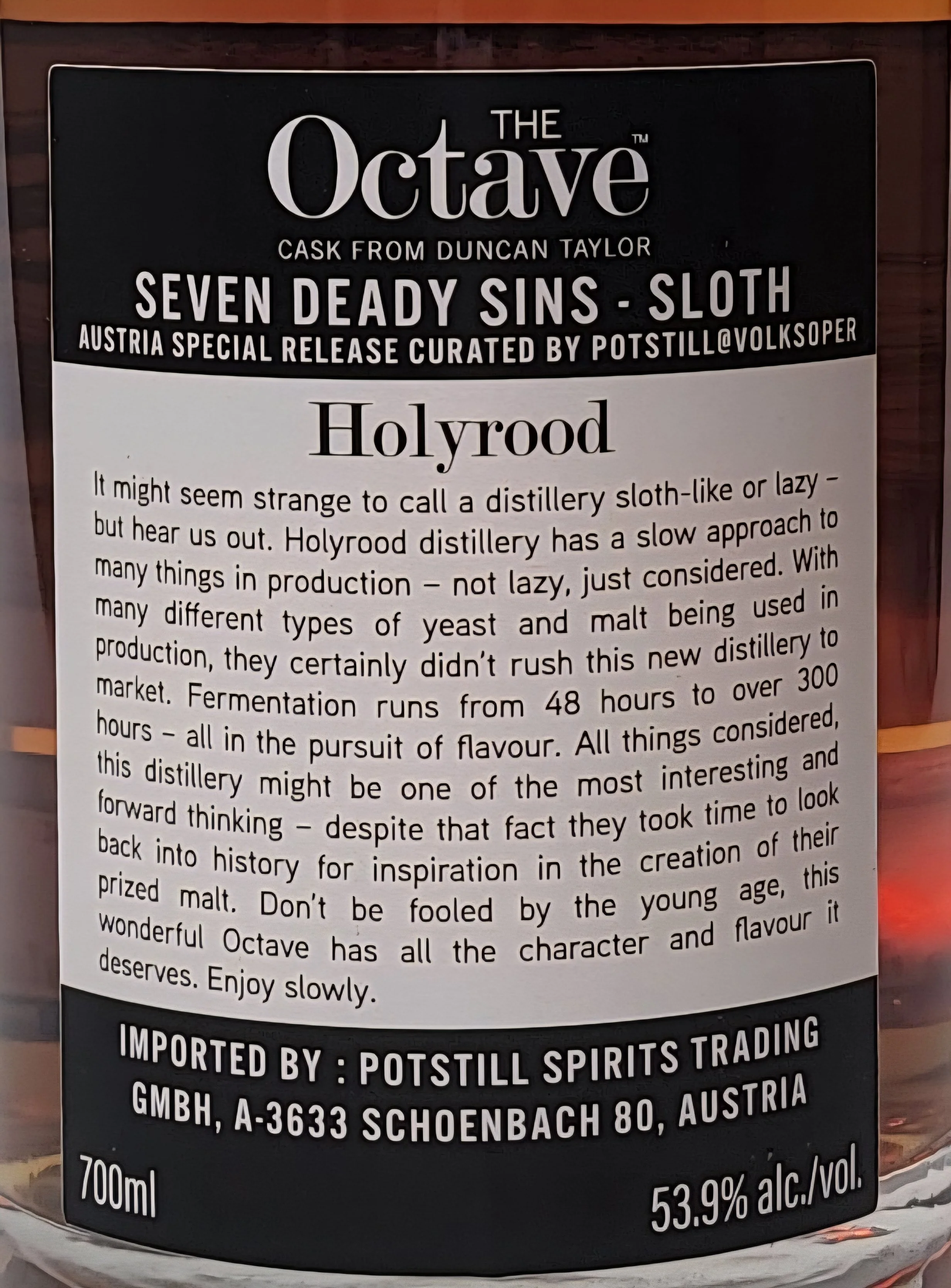
Sloth – Holyrood, 4 years old
Seemingly quiet, but anything but lazy: a pleasure that takes its time.
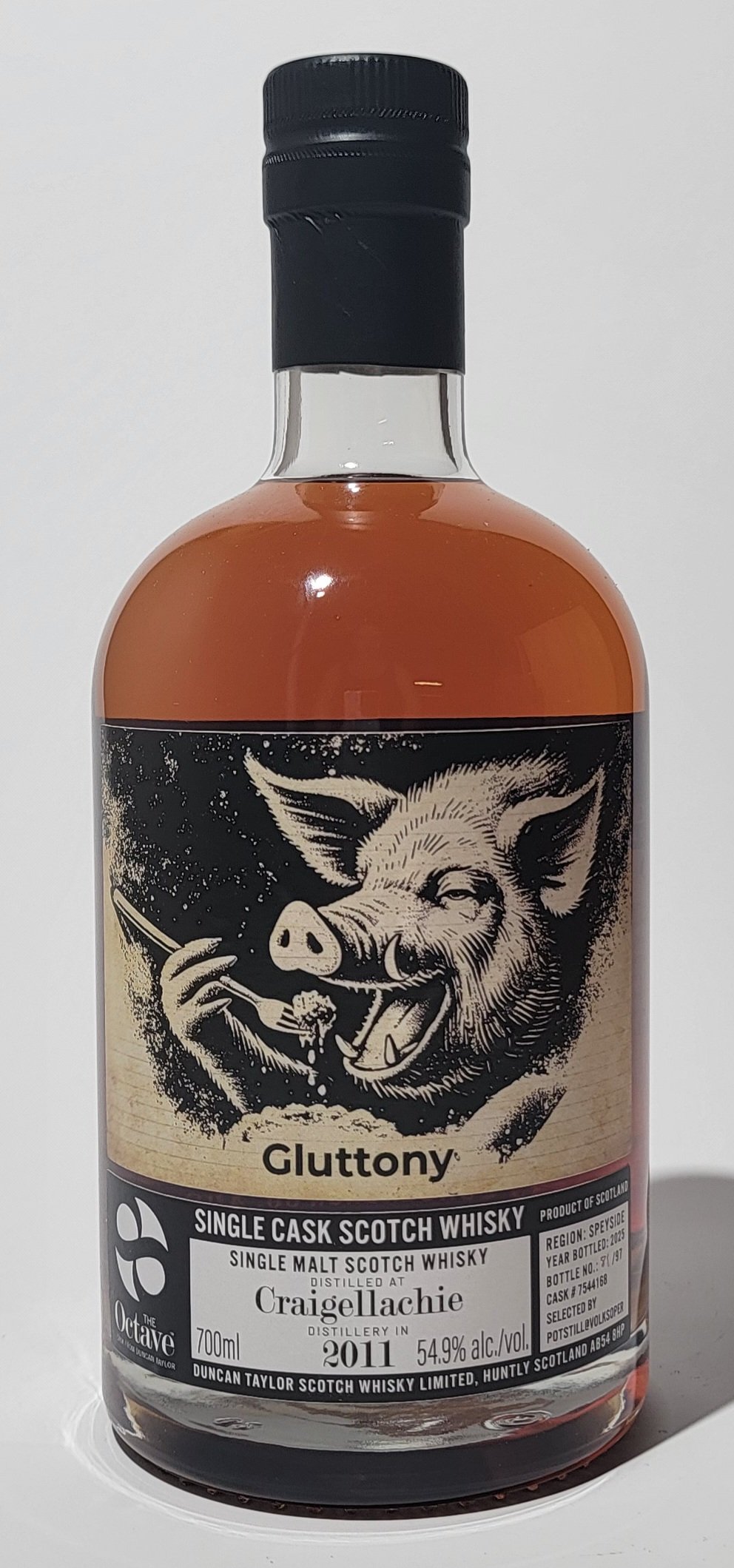
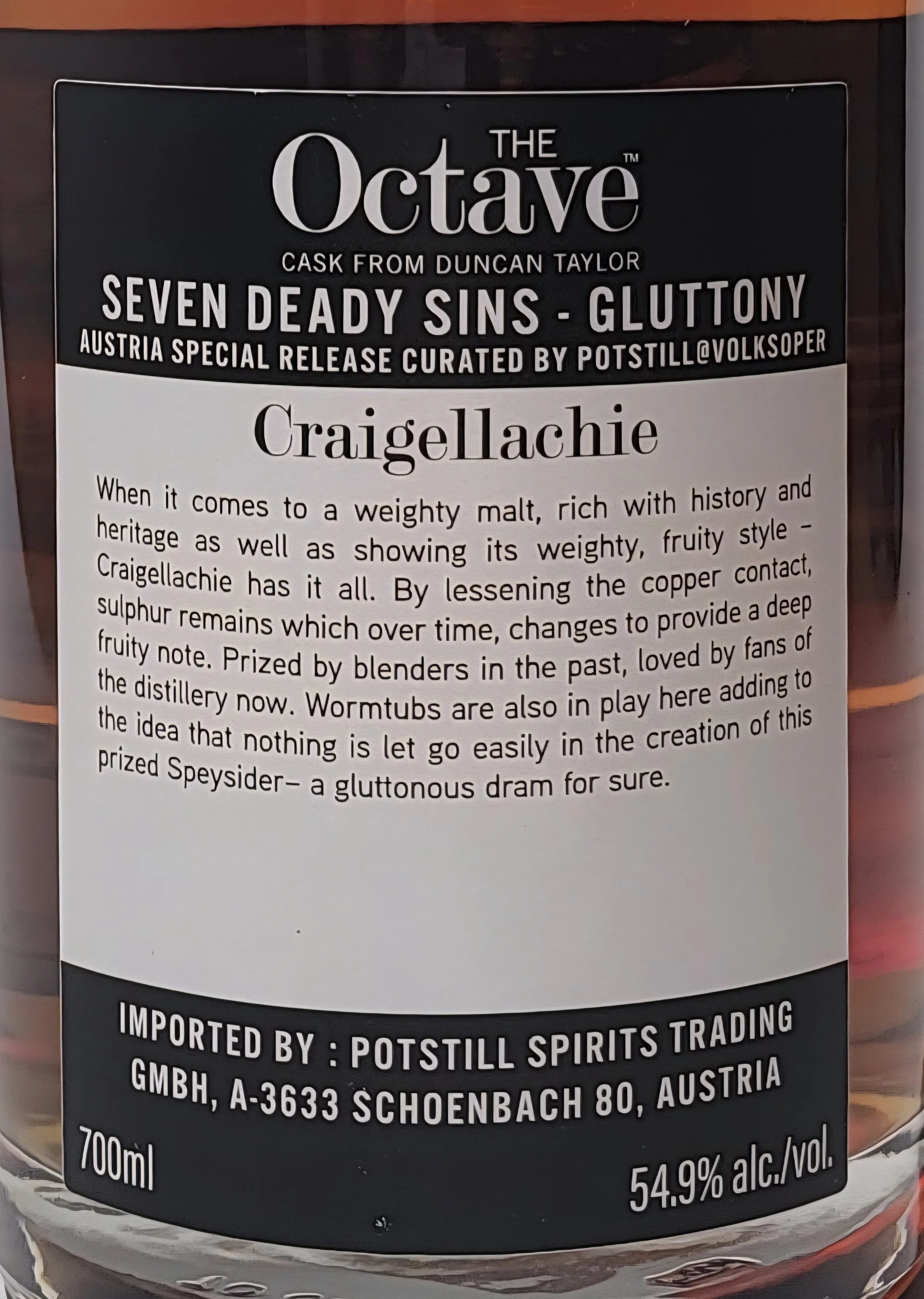
Gluttony – Craigellachie, 14 years old
Rich and full-bodied, without fear of excess.
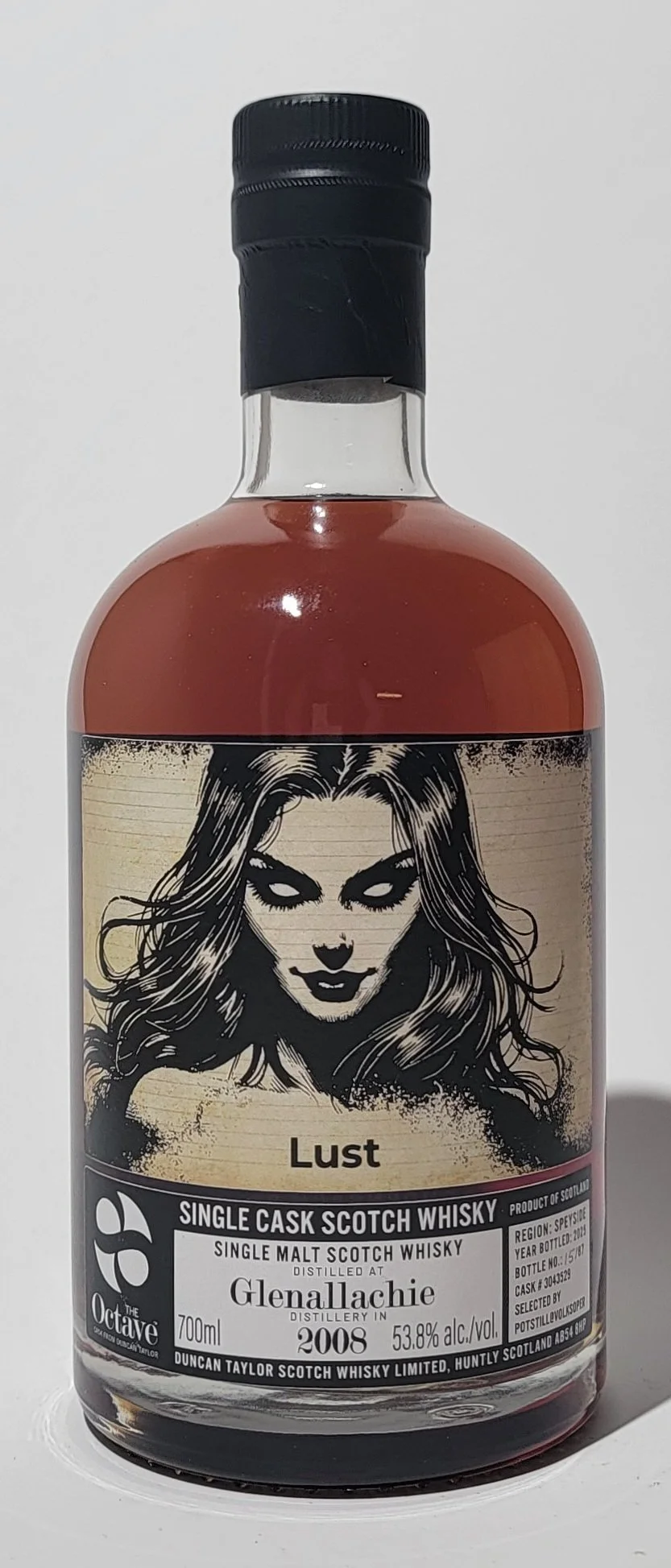
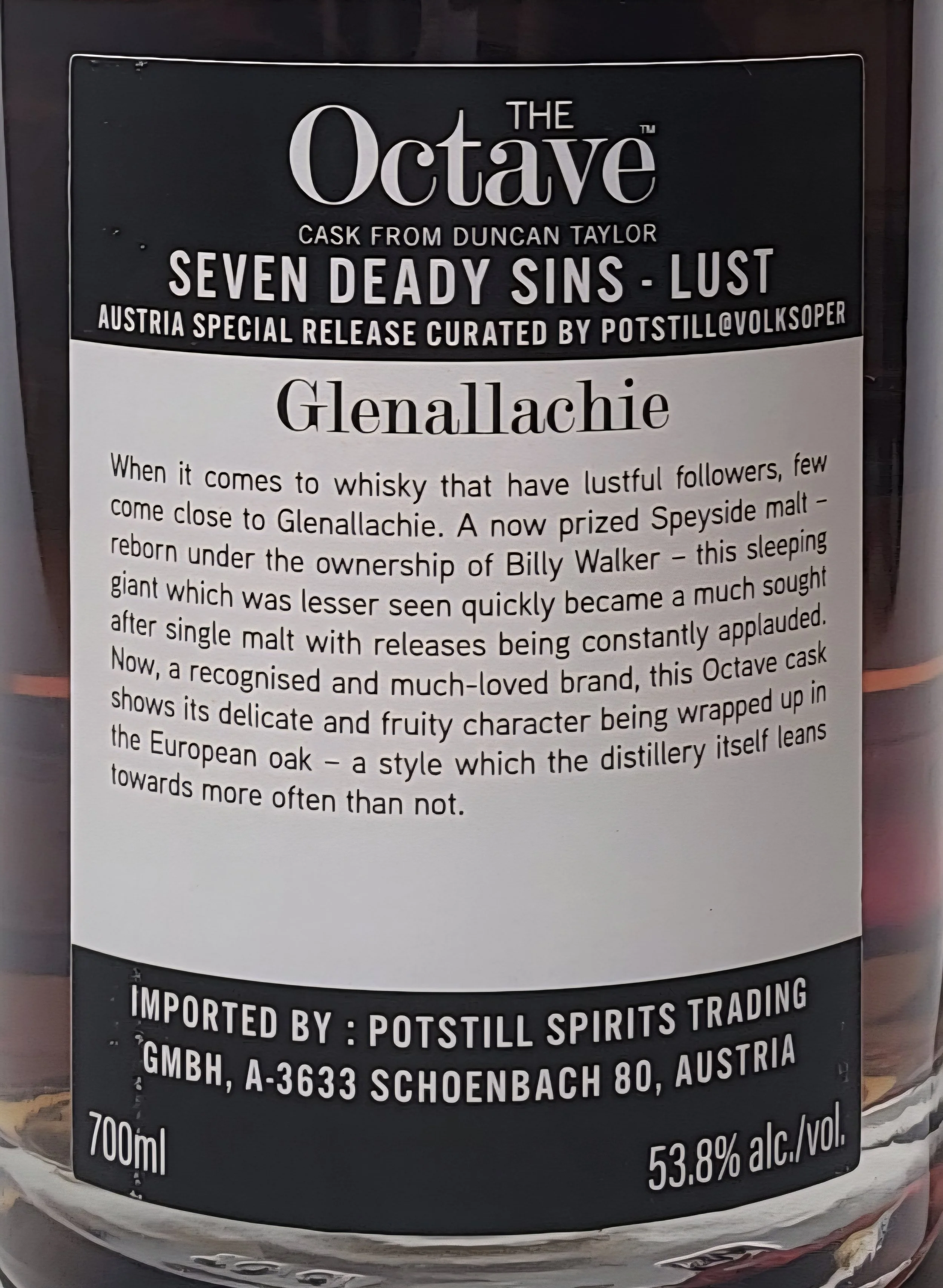
Lust – GlenAllachie, 17 years old
Deep, enveloping, seductive.
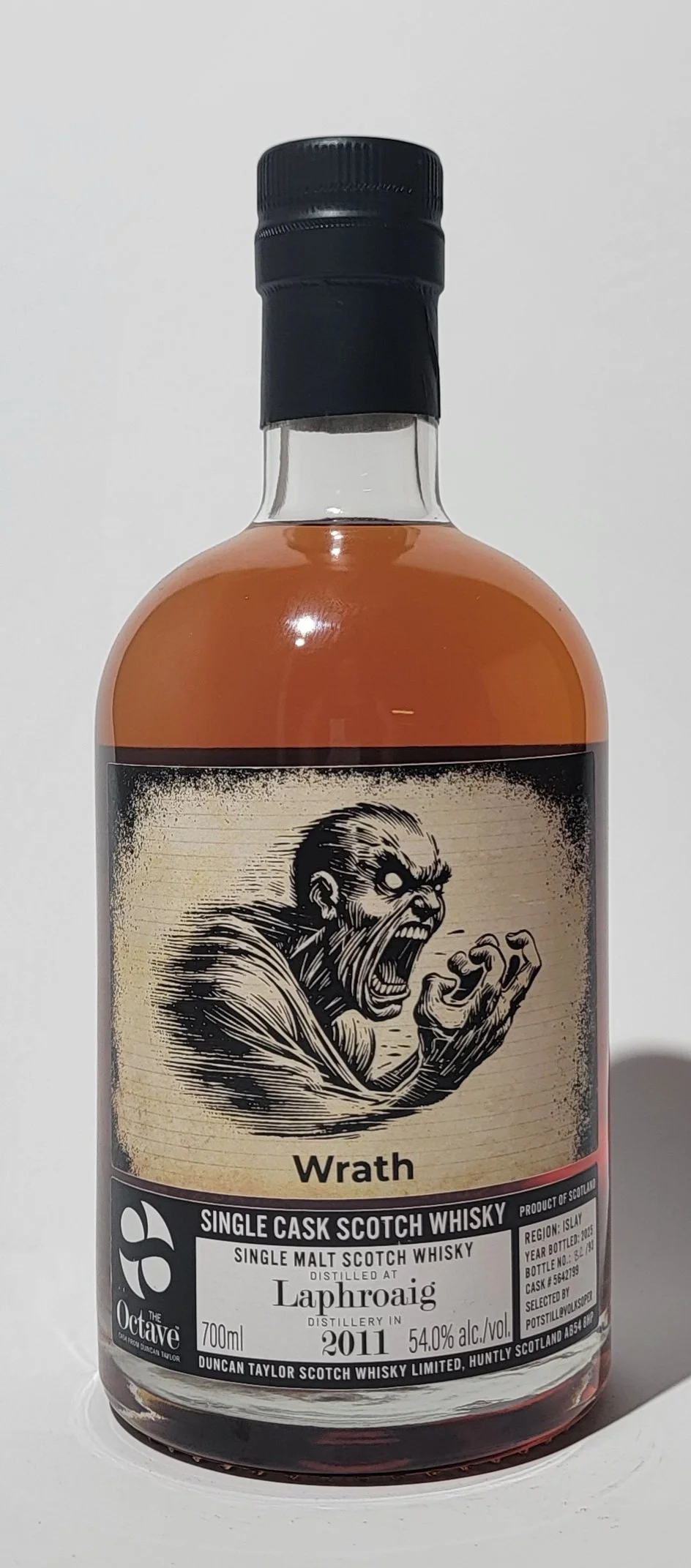
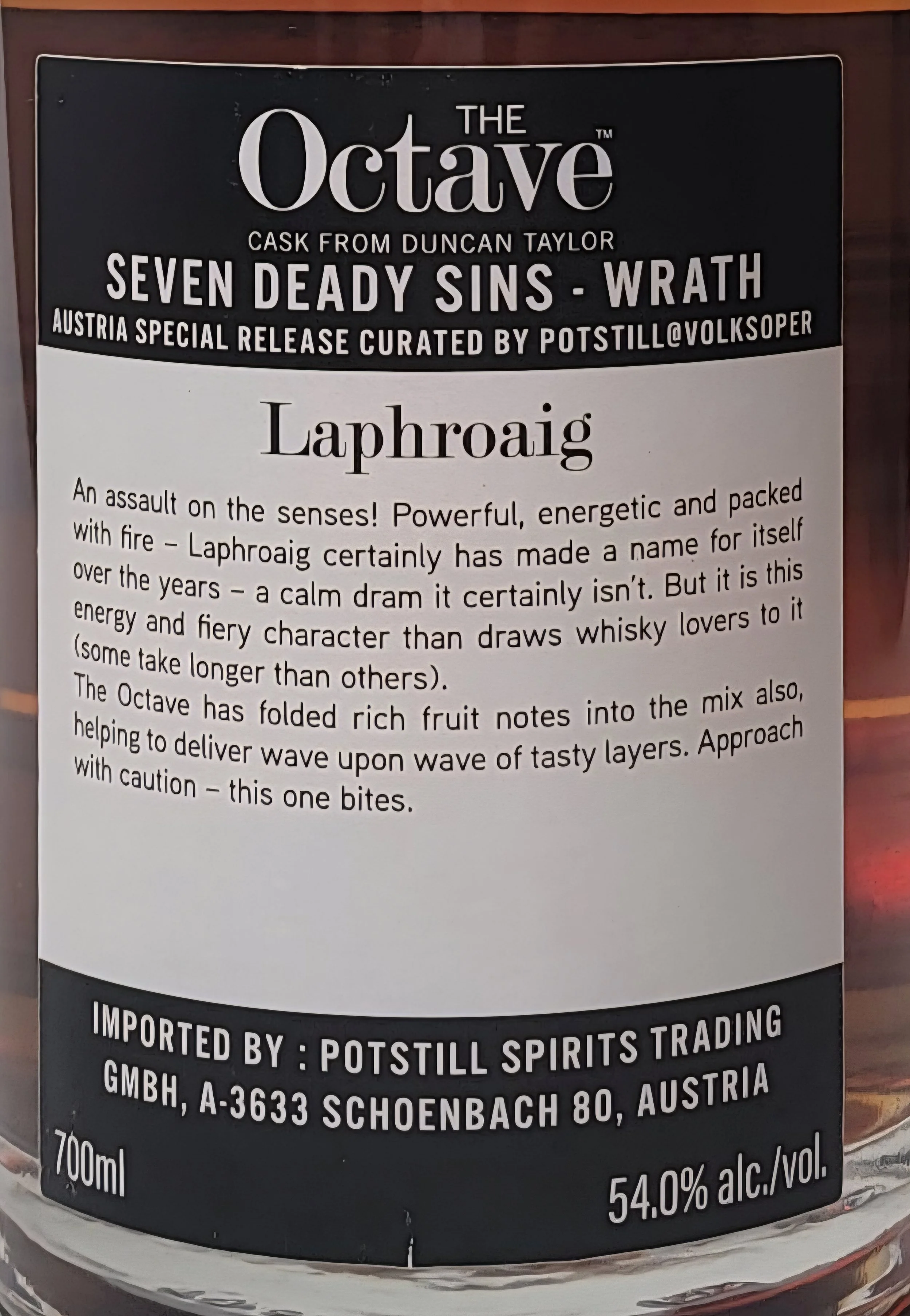
Wrath – Laphroaig, 14 years old
Peat, smoke, and sea: direct, intense, overwhelming.
final thoughts
The Seven Deadly Sins works because it has a clear direction. It is not an exercise in style, but a project consistent with Duncan Taylor's vision: character first and foremost, even at the cost of division.
If you want to see how this series comes to life in the glass and in comparison, I have recounted the complete experience in a dedicated video, available here: 👉 https://youtu.be/1yFHJcNMIFQ
Special thanks go to Herbert from Potstill Vienna, not only for collaborating with Duncan Taylor, but for making this project possible.
And, of course, for the incredible gift.
Thanks also to Rudi and all our friends at the Claymore Whisky Club for an evening that will not be easily forgotten.
Because, in the end, whisky is not just what we drink. It is above all who we share it with.
-
Ci sono degustazioni che servono per farsi un’idea di un whisky.
E poi ce ne sono altre che servono per raccontare una storia.La serie 7 Deadly Sins, firmata Duncan Taylor in collaborazione con Potstill Vienna, appartiene senza dubbio alla seconda categoria.
Non è una semplice raccolta di imbottigliamenti, ma un progetto con un’idea precisa: interpretare il whisky attraverso il concetto dei sette peccati capitali, trasformandoli in carattere, contrasto e personalità.I peccati capitali come chiave di lettura
Accidia, Gola, Ira, Invidia, Lussuria, Avidità e Superbia.
Più che categorie morali, i peccati capitali sono da sempre uno specchio delle inclinazioni umane. Parlano di eccessi, desideri, impulsi difficili da controllare.Trasportare questo immaginario nel mondo del whisky è un’operazione delicata. Il rischio è quello di cadere nell’esercizio di stile.
7 Deadly Sins, però, evita questa trappola scegliendo una strada più interessante: non cercare l’unanimità, ma raccontare caratteri distinti.Duncan Taylor e il progetto The Octave
Per comprendere davvero il senso di questa serie è necessario spendere qualche parola su Duncan Taylor, uno dei nomi più rispettati nel panorama degli imbottigliatori indipendenti.
Il filo conduttore di molti loro progetti è l’idea di interpretazione, non di semplificazione.
Anche in 7 Deadly Sins questa filosofia è evidente, soprattutto attraverso l’utilizzo delle botti The Octave.Si tratta di botti di dimensioni ridotte, pensate per aumentare l’interazione tra legno e distillato. Non per accelerare il tempo, ma per intensificare il risultato.
Il whisky che ne deriva è spesso più concentrato, più diretto, talvolta persino spigoloso.Non sono whisky che cercano di piacere a tutti.
Sono whisky che prendono posizione.Le sette interpretazioni
Ogni imbottigliamento della serie rappresenta un peccato capitale, non in modo didascalico, ma attraverso il carattere del distillato stesso:
Pride – Black Bull, 12 anni
Blended malt dall’identità forte e dalla sicurezza evidente.Greed – Invergordon, 14 anni
Single grain sorprendente, dove l’avidità diventa controllo e struttura.Envy – Dalmunach, 9 anni
Giovane, elegante e competitivo, con una freschezza che cattura l’attenzione.Sloth – Holyrood, 4 anni
Apparentemente quieto, ma tutt’altro che pigro: un piacere che si prende il suo tempo.Gluttony – Craigellachie, 14 anni
Ricco e corposo, senza paura dell’eccesso.Lust – GlenAllachie, 17 anni
Profondo, avvolgente, seducente.Wrath – Laphroaig, 14 anni
Torba, fumo e mare: diretto, intenso, travolgente.
Considerazioni finali
The Seven Deadly Sins funziona perché ha una direzione chiara.
Non è un esercizio di stile, ma un progetto coerente con la visione di Duncan Taylor: carattere prima di tutto, anche a costo di dividere.Se vuoi vedere come questa serie prende vita nel bicchiere e nel confronto, ho raccontato l’esperienza completa in un video dedicato, disponibile qui:
👉 https://youtu.be/1yFHJcNMIFQUn ringraziamento speciale va a Herbert di Potstill Vienna, non solo per la collaborazione con Duncan Taylor, ma per aver reso possibile questo progetto.
Grazie anche a Rudi e a tutti gli amici del Claymore Whisky Club, per una serata che difficilmente sarà dimenticata.Perché, alla fine, il whisky non è solo ciò che beviamo.
È soprattutto con chi lo condividiamo. -
Es gibt Verkostungen, die dazu dienen, sich einen Eindruck von einem Whisky zu verschaffen. Und dann gibt es andere, die dazu dienen, eine Geschichte zu erzählen.
Die Serie „7 Deadly Sins” von Duncan Taylor in Zusammenarbeit mit Potstill Vienna gehört zweifellos zur zweiten Kategorie. Es handelt sich nicht um eine einfache Sammlung von Abfüllungen, sondern um ein Projekt mit einer konkreten Idee: Whisky anhand des Konzepts der sieben Todsünden zu interpretieren und diese in Charakter, Kontrast und Persönlichkeit umzuwandeln.
Die Todsünden als Interpretationsschlüssel
Faulheit, Völlerei, Zorn, Neid, Wollust, Habgier und Hochmut. Die Todsünden sind weniger moralische Kategorien als vielmehr seit jeher ein Spiegelbild menschlicher Neigungen. Sie stehen für Exzesse, Begierden und schwer zu kontrollierende Impulse.
Diese Vorstellungswelt in die Welt des Whiskys zu übertragen, ist eine heikle Angelegenheit. Dabei besteht die Gefahr, in Stilübungen zu verfallen. 7 Deadly Sins vermeidet diese Falle jedoch, indem es einen interessanteren Weg einschlägt: Es strebt keine Einstimmigkeit an, sondern erzählt von unterschiedlichen Charakteren.
Duncan Taylor und das Projekt The Octave
Um den Sinn dieser Serie wirklich zu verstehen, muss man ein paar Worte über Duncan Taylor sagen, einen der angesehensten Namen in der Welt der unabhängigen Abfüller.
Der rote Faden vieler ihrer Projekte ist die Idee der Interpretation, nicht der Vereinfachung. Auch in 7 Deadly Sins ist diese Philosophie offensichtlich, vor allem durch die Verwendung der Fässer von The Octave.
Es handelt sich um Fässer kleiner Größe, die entwickelt wurden, um die Interaktion zwischen Holz und Destillat zu verstärken. Nicht um den Prozess zu beschleunigen, sondern um das Ergebnis zu intensivieren. Der daraus resultierende Whisky ist oft konzentrierter, direkter, manchmal sogar kantiger.
Es sind keine Whiskys, die versuchen, allen zu gefallen. Es sind Whiskys, die Stellung beziehen.
Die sieben Interpretationen
Jede Abfüllung der Serie steht für eine Todsünde, nicht auf didaktische Weise, sondern durch den Charakter des Destillats selbst:
Pride – Black Bull, 12 Jahre
Blended Malt mit starker Identität und offensichtlicher Selbstsicherheit.
Greed – Invergordon, 14 Jahre
Überraschender Single Grain, bei dem Gier zu Kontrolle und Struktur wird.
Envy – Dalmunach, 9 Jahre
Jung, elegant und wettbewerbsfähig, mit einer Frische, die die Aufmerksamkeit auf sich zieht.
Sloth – Holyrood, 4 Jahre
Scheinbar ruhig, aber alles andere als träge: ein Genuss, der sich Zeit lässt.
Gluttony – Craigellachie, 14 Jahre
Reichhaltig und vollmundig, ohne Angst vor Übermaß.
Lust – GlenAllachie, 17 Jahre
Tiefgründig, einhüllend, verführerisch.
Wrath – Laphroaig, 14 Jahre
Torf, Rauch und Meer: direkt, intensiv, überwältigend.
Abschließende Überlegungen
7 Deadly Sins funktioniert, weil es eine klare Richtung hat. Es ist keine Stilübung, sondern ein Projekt, das mit der Vision von Duncan Taylor übereinstimmt: Charakter steht an erster Stelle, auch wenn dies zu Uneinigkeit führt.
Wenn du sehen möchtest, wie diese Serie im Glas und im Vergleich zum Leben erwacht, habe ich die gesamte Erfahrung in einem speziellen Video festgehalten, das hier verfügbar ist: 👉 https://youtu.be/1yFHJcNMIFQ
Ein besonderer Dank geht an Herbert von Potstill Vienna, nicht nur für die Zusammenarbeit mit Duncan Taylor, sondern auch dafür, dass er dieses Projekt ermöglicht hat.
Und natürlich für das unglaubliche Geschenk.
Vielen Dank auch an Rudi und alle Freunde des Claymore Whisky Clubs für einen Abend, den wir so schnell nicht vergessen werden.
Denn letztendlich ist Whisky nicht nur das, was wir trinken. Es geht vor allem darum, mit wem wir ihn teilen.